


 Deutsch
 English
 Español
 Français
 Nederlands
 Português


 Share
Share




Beijing's Export Controls Trigger Sixfold Price Spikes
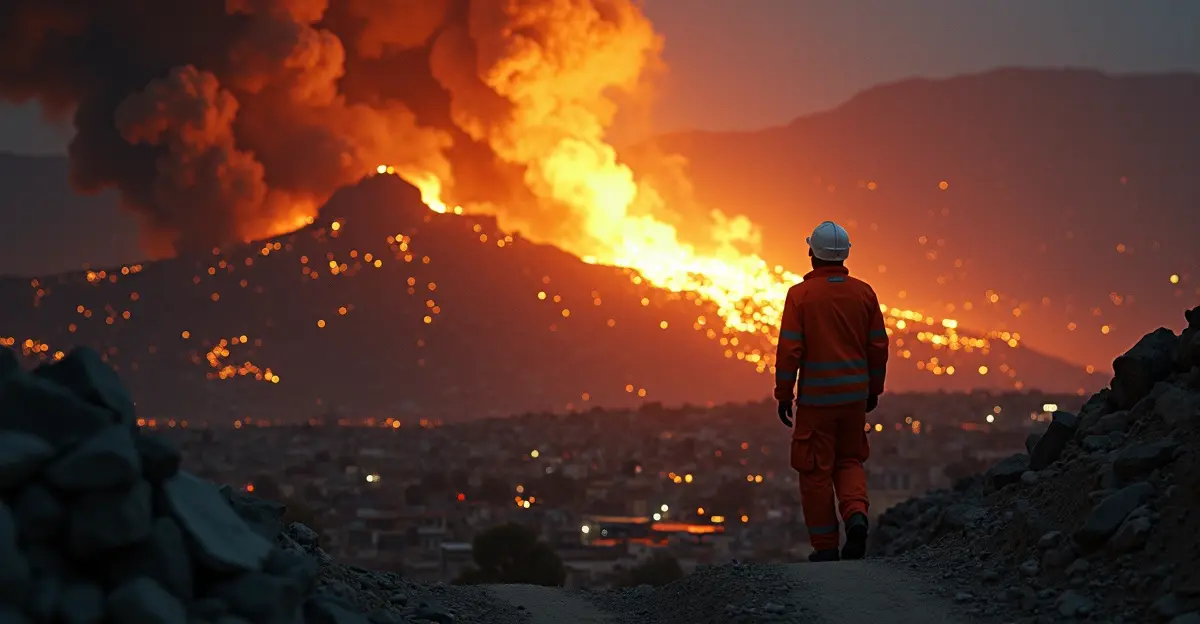
China's 2025–2026 export controls on rare earths, tungsten, and antimony have sent shockwaves through global supply chains, with prices spiking sixfold and licensing approval rates for European buyers plummeting below 25%. Beijing now controls 90% of global rare earth processing, 80% of tungsten, and 60% of antimony — materials essential for defense systems, electric vehicle batteries, and renewable energy infrastructure. The critical minerals supply chain has become the central battleground in a new era of resource geopolitics.
According to a multi-institutional analysis published in early 2026, over 80% of European companies remain dependent on Chinese supply chains. The report argues that Beijing is weaponizing control rather than scarcity, using temporary, reversible restrictions to maintain pricing power and extract strategic concessions while preventing large-scale Western alternative investment. The strategic window for Western diversification is narrowing rapidly, with analysts warning that rebuilding independent processing capacity will take 20–30 years — far exceeding the 12- to 18-month policy window before leverage shifts further.
The FORGE Alliance: A 54-Nation Response
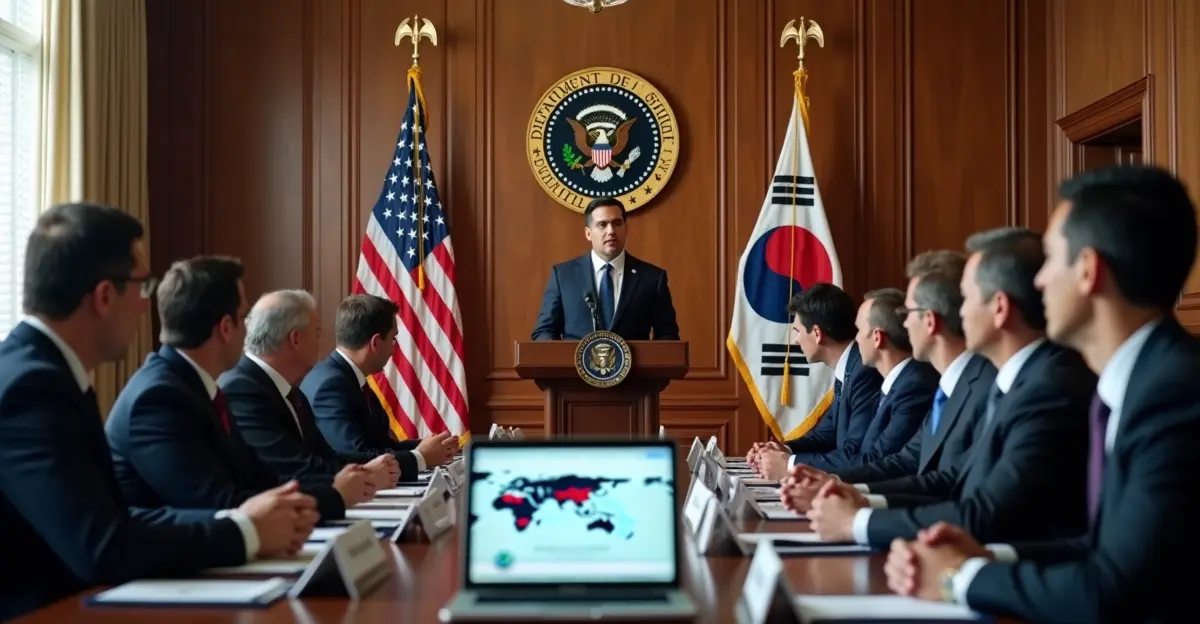
On February 4, 2026, the U.S. Department of State hosted the inaugural Critical Minerals Ministerial, led by Secretary of State Marco Rubio alongside Vice President JD Vance. Representatives from 54 countries and the European Commission attended, including 43 foreign ministers. The centerpiece of the event was the launch of FORGE (Forum on Resource Geostrategic Engagement), which succeeds the Minerals Security Partnership and is chaired by the Republic of Korea.
FORGE aims to create a preferential trade-and-investment zone with coordinated price floors to counter adversarial market manipulation. Vice President Vance described "reference prices for critical minerals" maintained through adjustable tariffs. The ministerial produced eleven new bilateral framework agreements with countries including Argentina, Morocco, Peru, the Philippines, the UAE, and the UK, bringing the total to twenty-one deals in five months. The administration has mobilized over $30 billion in letters of interest, loans, and investments over six months to support strategic minerals projects.
However, experts caution that FORGE faces significant hurdles. The FORGE alliance critical minerals strategy requires sustained coordination among 54 nations with divergent interests. Navigating an overlapping multilateral landscape — including the G7's Production Alliance and Pax Silica — will test the durability of this coalition.
Project Vault: A $12 Billion Stockpile Gamble
On February 2, 2026, the Trump administration launched Project Vault, a $12 billion public-private partnership to establish the U.S. Strategic Critical Minerals Reserve. Combining a $10 billion EXIM Bank loan with nearly $2 billion in private capital, the initiative stockpiles rare earth elements, lithium, cobalt, gallium, and uranium essential for defense systems, EV batteries, and advanced manufacturing. Participating firms include GE Vernova, Boeing, General Motors, and Western Digital.
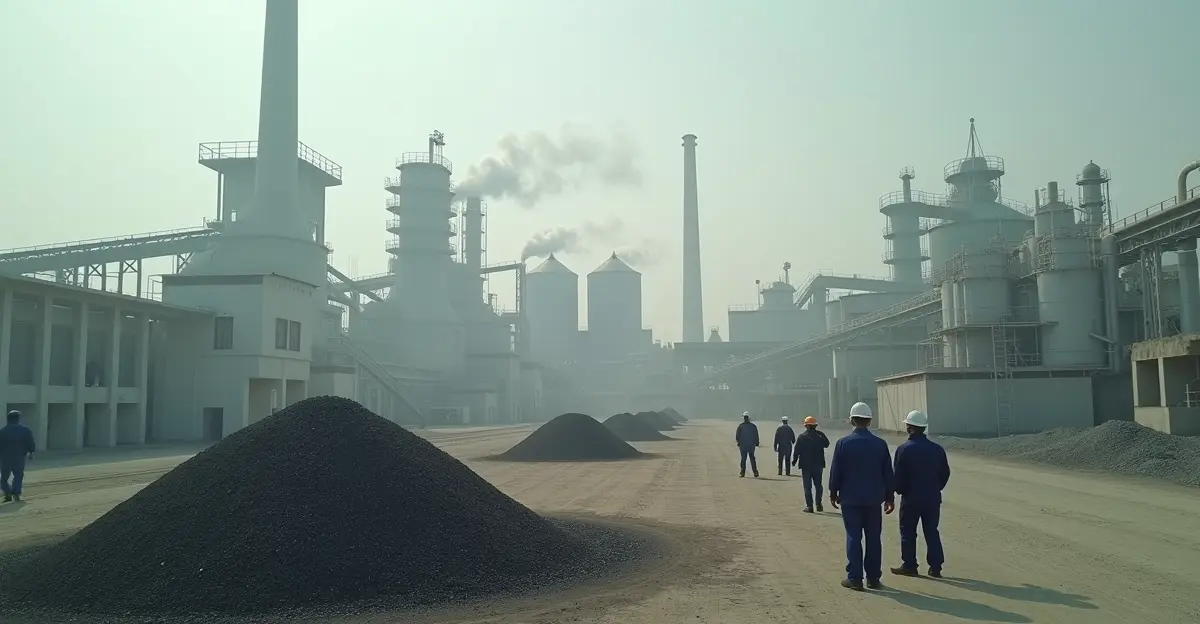
While Project Vault signals a major shift toward strategic resource nationalism, analysts warn of risks including complex mineral storage requirements, potential weaponization of stockpiles, and lack of congressional authorization. The Project Vault stockpile critical minerals initiative is a bold move, but it does not address the fundamental bottleneck: processing capacity. Even with a stockpile, the West remains dependent on Chinese refineries to turn raw minerals into usable materials.
Three Strategic Paths for the West
The multi-institutional analysis outlines three strategic paths for Western nations: managed dependence, costly independence, or a hybrid model. Managed dependence would accept continued reliance on Chinese supply chains while building limited redundancy. Costly independence would require massive investment in domestic processing capacity — estimated at $50–100 billion over 20 years. The hybrid model would combine strategic stockpiles with friendshoring agreements and targeted processing investments.
Each path requires significant trade-offs. Managed dependence risks strategic vulnerability during crises. Costly independence may prove economically unviable without sustained government support. The hybrid model, while pragmatic, may not move fast enough to counter Beijing's tightening grip. The Western critical minerals strategy 2026 debate is intensifying as the 12- to 18-month policy window narrows.
Geopolitical Implications for Global Trade Architecture
UNCTAD reports nearly 100 new export measures on critical minerals since 2020, with China tightening controls throughout early 2026. This trend is reshaping global trade architecture, as nations increasingly prioritize security over efficiency. The weaponization of mineral supply chains could fragment global markets, creating rival blocs with separate standards, pricing mechanisms, and investment rules.
China's dominance is not limited to rare earths. Beijing also controls significant shares of gallium, germanium, and graphite processing — materials critical for semiconductors and battery anodes. The China rare earth export controls 2026 have already forced Western companies to reconsider their supply chain strategies, with some accelerating recycling efforts and others exploring deep-sea mining.
Expert Perspectives
"The window for action is closing fast," said Dr. Emily Chen, a supply chain analyst at the Center for Strategic and International Studies. "China's strategy is to create a fait accompli — by the time the West builds alternatives, Beijing will have locked in long-term supply agreements with key partners and established pricing power that will be difficult to break."
"FORGE and Project Vault are necessary but not sufficient," added retired General James Miller, former commander of U.S. Transportation Command. "We need a Manhattan Project-style effort for critical minerals processing. The $30 billion mobilized so far is a start, but we're talking about a multi-generational challenge."
FAQ
What are critical minerals and why are they important?
Critical minerals are raw materials essential for defense systems, electric vehicle batteries, renewable energy infrastructure, and advanced manufacturing. They include rare earth elements, lithium, cobalt, tungsten, and antimony. China dominates global processing, controlling 90% of rare earth refining.
How have China's export controls affected prices?
China's 2025–2026 export controls on rare earths, tungsten, and antimony triggered sixfold price spikes. Licensing approval rates for European buyers fell below 25%, creating severe supply shortages for Western manufacturers.
What is FORGE and how does it work?
FORGE (Forum on Resource Geostrategic Engagement) is a 54-nation coalition launched by the U.S. in February 2026 to create a preferential trade-and-investment zone with coordinated price floors for critical minerals. It replaces the Minerals Security Partnership and is chaired by South Korea.
What is Project Vault?
Project Vault is a $12 billion public-private partnership to establish the U.S. Strategic Critical Minerals Reserve. It stockpiles rare earths, lithium, cobalt, gallium, and uranium, combining a $10 billion EXIM Bank loan with nearly $2 billion in private capital.
How long will it take the West to build independent processing capacity?
Analysts estimate that rebuilding independent Western processing capacity for critical minerals will take 20–30 years, far exceeding the 12- to 18-month policy window before China's leverage shifts further.
Conclusion: A Defining Geopolitical Challenge
The critical minerals supply chain crisis is the defining geopolitical and economic story of 2026. With UNCTAD reporting nearly 100 new export measures since 2020 and China tightening controls throughout early 2026, the strategic window for Western diversification is narrowing rapidly. FORGE and Project Vault represent significant steps, but they are only the beginning of a multi-decade effort to rebalance global mineral supply chains. The choices made in the next 12–18 months will determine whether the West can achieve strategic autonomy or remain vulnerable to Beijing's leverage for a generation.


Follow Discussion